The Game Design Expo Gets Better With Age
 This past weekend we attended the 2011 Game Design Expo hosted by our friends at the Vancouver Film School Game Design Programme. As with previous years the sessions were informative and entertaining, leaving us with many areas for further research and ideas on how to apply these new ideas to what we are trying to accomplish. For a more in-depth look at the sessions as they happened, search the #gdexpo hashtag on Twitter for my live-tweets as well as those from VFS staff.
My favourite session of the day was that of Holistic Design, presented by Mitchell Lagran. Sometimes all it takes is hearing a different way of approaching a project to spark new ideas and enthusiasm, and as the 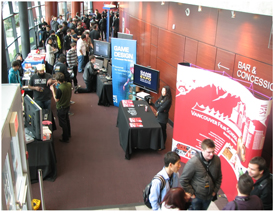 day progressed it became evident that the theories presented by Mitchell are those that have merit as other developers referred to his session in their own presentations.
Important take-aways from Mitch’s session, which took place right after lunch, was that developers need to focus their intent – doing what they set out to do well, without distracting the gamer with extraneous mechanics that will not serve the game. In other words, try not to require your gamer to do more than what is necessary to keep the game flowing. Do not jar your gamer out of the experience, because if you disconnect the audience from the action too many times, they will not be inclined to continue playing. Mitch sited Bioware’s Mass Effect franchise as an excellent example of holistic game design – know where you are going and what you want to do before you start the journey. Make sure that all components of your game’s design work well together and serve the purpose of an enjoyable, replayable escape from the mundane.
I think that what I enjoyed most about the Industry Day sessions was that the speakers went beyond the art work and programming, opening the door to practices and principles brought into play long before the 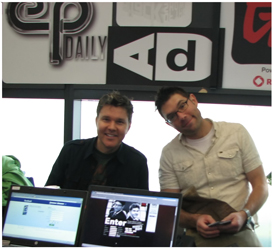 first world object is placed and characters are animated – as well as ideas that can be put into place once the game is shipped to help it become noticed in the mass market.
Jaakko Iisalo, Senior Game Designer and Matthew Wilson, Marketing Manager for Rovio Mobile opened the day with How to Design a Hit Game for the iPhone. The designing duo talked about the concepts, designs and marketing behind the hit game Angry Birds. The secret to their success was in part keeping everything simple, with the marketing plan following the basic premise of engaging their audience and letting the product speak for itself.
The four members of the Angry Birds team have learned how to seek out opportunities for their product and take advantage of them. Through smart marketing and an appealing product, Rovio was able to watch Angry Birds move up the sales charts and become an industry phenomena. With a very small to non-existent marketing budget, the developers took advantage of today’s social networking sites and social media basics to engage those who had already bought the game and to draw in those who had yet to put out their dollar in the various App Stores. One of the top take-aways from this 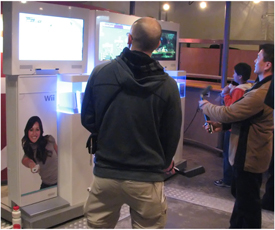 session were to never give up and to never treat your titles like a disposable object once it is released – find out ways to give your audience more, add to their experience to keep them playing your game.
The second session was presented by United Front Games‘ Lead Producer Jeff O’Connell and Lead Producer Mike Skupa, whose topic was Action Game Mechanics In An Open-World Game. The pair took us on a photographic tour of Hong Kong, sharing a few of the 20 000 photos the studio shot on location in Hong Kong as they prepared to work on the upcoming action title True Crime: Hong Kong. What I enjoyed most about this presentation was how the development team planned to incorporate real-world elements into the game’s play mechanics while also capturing the essence of Hong Kong’s culture.
Some important take-aways for those who want to develop an open-world game are mission mapping and fast travel options for the player. Be mindful of where your missions begin and end – is there a disconnect between locations, 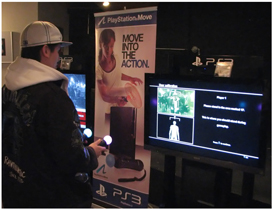 and how will you keep the game-flow smooth for the player. Make sure that your features and environment serve to move the story forward while keeping the player constantly engaged, while remaining true to the physical setting you’ve chosen.
In Novel Game Designs With PlayStation Move and Eye, Sony Computer Entertainment R & D Software Engineer Anton Mikhailov led the audience through a very entertaining and informative session about the importance of your game’s controller system conveying your player’s sense of immediacy and accuracy, which serve to immerse the player in your product. PlayStation’s goal with Move was to give the player six degrees of movement through hand gestures, whether that player was wielding a sword, fighting in hand to hand combat or painting. The most important message in this session was that expressiveness in your controls is paramount, as this is what will give your players a feel for the experience, drawing them into an immersive and emergent style of gaming.
Those who aspire to become Community Managers in the game development community would have been very appreciative of the efforts which drove the Halo Waypoint team to design and launch a fully immersive experience for the Halo game community over three screens – Xbox 360, PC and mobile phone – while ensuring that they  delivered the right content and features to the appropriate screen. This initiative helped to drive user loyalty as well as add to the ways gamers interacted with the Halo gaming community as a whole. Paul Parsons, Senior Game Designer at 343 Industries led an excellent session discussing the premise behind and the four key steps taken to launching WayPoint – and he was also one of the very first graduates of the VFS Game Design Programme.
Alan Shen, Senior Design Programme Manager for Microsoft’s Entertainment Experiences Group demonstrated the scope and design of Kinect’s Natural User Interface, touching on the expectations placed in the market by Hollywood through such futuristic films as BladeRunner, Iron Man, Minority Report and Star Trek. Part of the challenge was how to develop a system that would connect the gamer to the experience while working towards meeting those Hollywood expectations. As there is no common, global gesture language that would translate easily into game mechanics, the development team had to look at what actions would be intuitive, as well as fun and meaningful ways to educate gamers in regards to their playspace environment and full body game play.
 Relic Entertainment Game Director Raphael van Lierop took the audience through a very engaging and entertaining session titled Steering The Rocket: Harnessing the Power of Creative People. One of the most important take-aways from this session is that creative people need to feel some type of empowerment and ownership of their creative process. Collaboration and communication is key in establishing this basis, providing you build the process on a firm base of ground rules which serve to create a climate of respect and encourage a guided form of idea generation and motivation. Micro management of your team will kill their creativity; you need to allow for creative freedom while following a clear line of communication in regards to decision making and assistance with issues that may arise. Raphael noted that he would be publishing the screens from his talk online, you can follow him on Twitter to be kept up to date on this.
Jonathan Gallina, who served as the Lead Game Designer on Tron: Evolution built on the day’s theme of collaboration, discussing the importance of co-operation in building a movie-based game and overcoming the stigma long associated with the cross-over of theatrical and game experience. The Tron: Evolution team were in a unique position, as the film and special effects were all done in Vancouver, giving each team the opportunity to work together, sharing  both assets and ideas. One of the most important factors that cannot be overlooked when developing a game to accompany a movie’s debut is the time required to produce a game that will not end up on the pile of movie-game failures. As with previous sessions, Jonathan stated the importance of establishing ground rules for the project scope, prototyping and iteration, as well as working to mesh the story’s canon within the game.
EA-Visceral Lead Designer Seth Marinello covered many design features that can be used to create fun through fear as experienced by the gamer in Dead Space and Dead Space 2. Some of the most important factors to build into a horror-survival game are the ways in which environment, lighting and music all inter-connect to create the emotion of fear, while also giving the gamer some breathing room to recover from each scary episode before building to the next one. As also stated by previous speakers, do not jar your players out of the experience – draw on their fears while still giving them the cushion of knowing that the horror is not real without making it apparent that the situation is contrived. Put your players in a position of power at key points in the game, but then take it away to enhance the scariness of the scenario. A loss of the feeling of empowerment will build on the player’s fear in a given situation, while the ability to work through the scene and survive will drive the triumphant feeling a gamer needs to carry on through the entire story.
 The speaker sessions were concluded by Cory Stockton, Lead Content Designer for Blizzard Entertainment’s World of Warcraft franchise. The most insightful parts of his presentation was how to use tools such as mind-mapping, Adobe Illustrator and Visio Flowcharts will provide designers with the ability to create a game which is true to scale and follows a logical flow. It is important for design teams to make use of the tools available to them, adapting them into a process which works for that particular project and its goals. Creative people are visual – build on their ability to see flaws and nurture ideas by giving them visual guidelines, whether it’s a wall poster of the game’s world or a chart showing every person on the team and his or her areas of responsibility. Flowcharts are also excellent for tracking missions, quests and production times while wikis are useful in keeping the entire team up to date with production changes, assets and storyline. The important take-away from this session is to find the right tools and make full use of them throughout the entire production process.
Once the sessions concluded and just prior to recognizing BigPark’s contribution to the game development programme at VFS with its annual Service Recognition plaque, VFS Head of Game Design Dave Warfield introduced Relic Entertainment General Manager Jonathan Dowdeswell. Jonathan spoke of a tragic event last year which many of us were sadly familiar with – the untimely death of Company of Heroes’ lead game designer Brian Wood in a motor vehicle accident last September. Jonathan related how touched Brian’s wife and family were by the outpouring of support shown to them by both the gamer and game developer communities around the world, and that he was  pleased to announce that to both honour and continue Brian’s contribution to the international game community, as well as in memory of his passions in life, Relic will be awarding a four-month internship to three graduating VFS Game Design students each year who exhibit a similar passion and excellence in game design.
“Relic Entertainment has worked with VFS for a number of years and in the past has had employees who taught classes as part of the Game Design curriculum,” says Dowdeswell. “Continuing this partnership in a meaningful and long lasting effort by introducing the Brian Wood Memorial Game Design Internship was a natural fit for all concerned.”
The inaugural internship will be awarded in February 2011, and the chosen VFS Game Design graduate will have the opportunity to work directly with a team at Relic, pioneering exciting projects that impact the development of titles at the Vancouver-based studio.
“We are honoured and humbled to be a part of carrying on Brian’s legacy with this memorial,” says Dave Warfield, Head of VFS Game Design. “Not only does it represent the values of game design and supporting new designers that were such a big part of his passion, but it allows us to share that with the community that was so affected by his tragic death.”
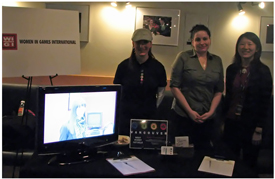 Sunday’s programme for the annual Game Design Expo consisted of the annual Open House, when the school invites future students and their parents to take part in some hands-on development classes, pass some time in the VFS Arcade and interact with programme instructors. Also taking part in the Open House was the Women In Games Vancouver group, who offer networking and advice to women who work or who are interested in working in interactive media. As with Saturday’s attendees, the locally developed zombie killing game Drumskulls was a popular point of participation for the 500 Open House registrants. Congratulations to the entire organizational team, students, volunteers, sponsors and speakers at this year’s Game Design Expo for a job very well done.